How 3 Women Leaders Broke Into Broadcast Tech: Career Secrets Revealed
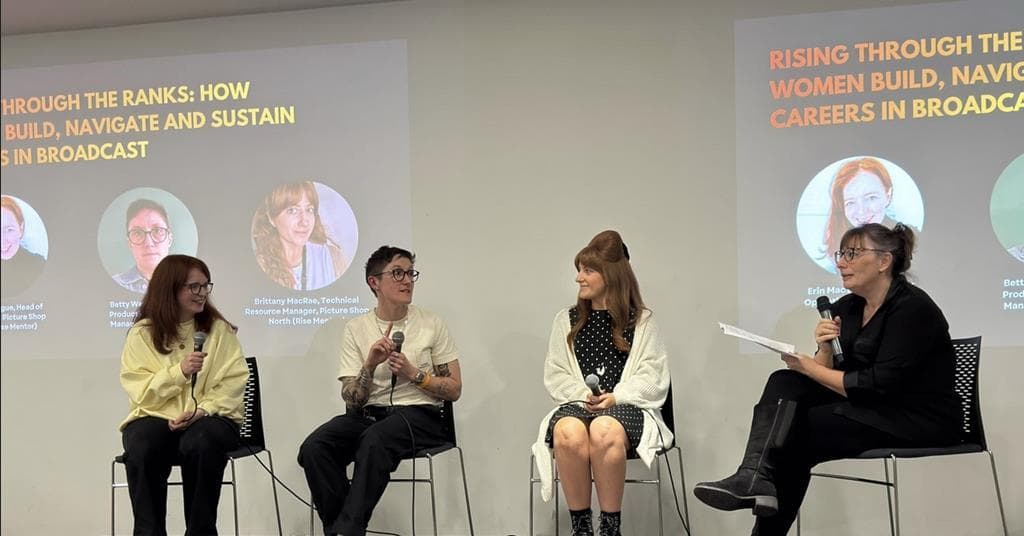
Three female leaders in the broadcast tech sector share their career journeys and advice for breaking into the industry and advancing professionally. This conversation comes from a panel discussion at a Rise event held at Media City on March 14.
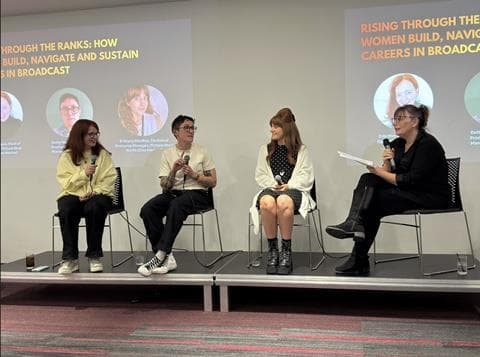
The Panel
- Erin MacTague, head of operations, Picture Shop (pictured far left)
- Betty Warburton, operations manager, Dock10 (pictured second left)
- Brittany MacRae, technical resource manager, Picture Shop (pictured second right)
- Chaired by Charlotte Wheeler, Broadcast Tech director (pictured far right)
Brittany MacRae: Technical Resource Manager, Picture Shop
My first full-time job was at Dock10, which I landed after volunteering for various companies. Without that experience, I probably wouldn’t have gotten the position. I enjoyed my role but stayed in my comfort zone until I decided to make a complete career change by joining the engineering team. It was new and out of my comfort zone, but I loved it.
To get into a job you want, it’s all about talking to people and attending events like these. They can be intimidating—nobody wants to go alone to a room full of people—but it’s genuinely about the connections you make. In university, I thought I wanted to be a camera operator, but I discovered other roles I didn’t know existed through networking. Someone would introduce me to another person, and eventually, opportunities arose.
I applied for everything, even jobs I didn’t want, just to keep my name out there. It only takes one person to say, “Let’s give her a chance.” At networking events, people often take your LinkedIn or email but rarely follow up. It’s so accessible now that they move on quickly. When messaging someone, be specific: instead of saying, “I want to work in media,” research their role and start a conversation about it. Ask for a coffee chat to learn more.
Betty Warburton: Operations Manager, Dock10
I was lucky to start in a full-time job at Sumners 20 years ago. Now, I’m an operations manager at Dock10. Initially, I thought I wanted to be an editor, so I changed jobs in 2011 to try editing—and I absolutely hated it. Like Britt said, there are roles in broadcast you don’t know exist until you dive in. I followed what I enjoyed, found gaps, and moved into them, ending up where I am now. I never imagined this job as a junior.
My foot in the door was applying at Summers. After a year and a half, I cold-emailed what turned out to be the owners of The Farm in London, not knowing who they were. I wrote, “I need to move to London because my girlfriend has. Do you have any jobs?” They appreciated my naivety, and within a month, I had a job in London.
Erin MacTague: Head of Operations, Picture Shop
I’m old enough that I saw a job in the back of the Manchester Evening News for a bookings coordinator at a camera crew company in the middle of nowhere. I had some media experience from my degree, so I applied. My experience was just part-time uni jobs—working at Halifax student mortgages and a record store. I used those skills to convince them I was right for the job, even without industry experience.
To break into the industry or advance your career, I recommend using LinkedIn to research people at companies you’re interested in or who make programs you like. Follow or connect with them (if their settings allow) and learn from their activities.
Be persistent in applying for roles. If you’re told it’s not the right time, ask if you can follow up later. I’ve hired people who used this approach because they were polite in their emails, and I remembered them when a position opened. It’s all about how you handle it.
- #broadcasttech
- #careeradvice
- #networking
- #womenintech
- #jobsearch
Comments · 0